
I was standing in an REI somewhere around 2010, not really shopping for anything in particular, when I walked past a display of trail maps. One of them stopped me. The cover photo showed an alpine lake, a deep — set into a vast granite cirque, surrounded by jagged white peaks. I stared at it for a long time. I didn’t know where it was. I didn’t know I was going to find out, years later, that it was Sapphire Lake and Emerald Lake, deep in the Trinity Alps Wilderness in Northern California. I just knew I needed to be there.
📑 Table of Contents (click to collapse)
That single image cracked something open. It pulled me back to a part of my life I had quietly walked away from in college and almost forgotten about — and started a chain of trips that would stretch over more than a decade and counting.
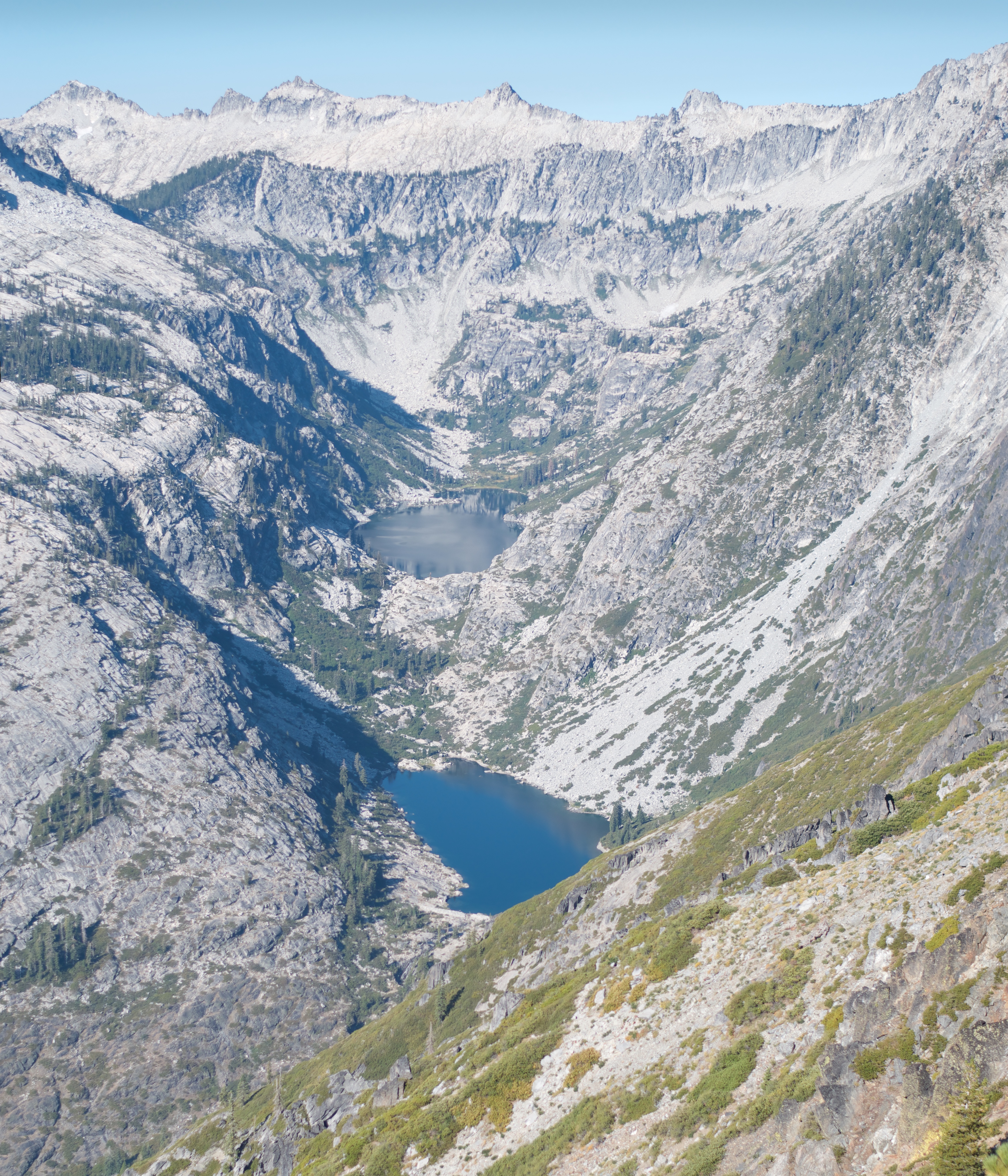
This is the first chapter in my backpacking story. To explain why a single photo could hit so hard, I need to back up to the late 1990s.
A Boy Scout Childhood in the Backcountry
I joined Boy Scouts as a kid in the late nineties and stayed in all the way until I aged out at eighteen. Most kids quit around the time they hit middle school — they get too cool for the uniform, or sports take over, or other things start filling their evenings. I never did. The reason I stuck around was simple: the trips.
Camping weekends in the local mountains. Backpacking trips into wilderness areas I would not have known existed otherwise. The kind of long, slow, quiet days that build a particular relationship with the outdoors — one where you stop being a visitor and start feeling like you belong out there. I loved every single one of them. Whatever was happening at school, whatever was complicated about being a teenager, none of it followed me into a tent on a cold night in the woods.
Along the way I worked through the rank advancements that the program is built around. Eventually I earned the rank of Eagle Scout — the highest rank in Boy Scouting, requiring a leadership service project, twenty-one specific merit badges, and the kind of multi-year commitment that you can only really sustain if you actually like the work. I kept going after that. Eagle Palms are awarded for additional merit badges earned beyond the twenty-one required for Eagle: a Bronze Palm for five extra, a Gold Palm for ten, a Silver Palm for fifteen. I earned the Silver Palm, which meant I finished my scouting career with a total of thirty-six merit badges. Not a brag, just a measure of how much time I was happy to spend on it.
Philmont
If you’ve never heard of Philmont Scout Ranch, here’s the short version: it’s the BSA’s flagship backpacking destination, a 140,000-acre wilderness in the Sangre de Cristo mountains of northern New Mexico. Crews of scouts hike anywhere from sixty to over a hundred miles across it on multi-week treks. It’s the kind of trip you remember in real detail thirty years later.
I went to Philmont with my troop while I was a scout. We climbed mountains. We slept under stars so thick they didn’t look real. We rationed water on dry stretches and hiked in afternoon thunderstorms that came up out of nothing. We lived out of our packs for weeks at a time. By the end of it, I knew how to read a topo map, set up camp in the rain, and walk for ten hours a day with thirty-five pounds on my back.
That trip is where backpacking really took root for me. Camping is one thing — backpacking is another. The point of backpacking is the act of moving through wild country on foot, carrying everything you need, watching the landscape change one ridge at a time. Philmont made that click.
Boundary Waters
The other major scout destination is the Northern Tier base in the Boundary Waters Canoe Area Wilderness on the Minnesota–Ontario border. Where Philmont is the BSA’s backpacking high adventure, Northern Tier is the canoe equivalent: a million acres of interconnected lakes and rivers, with crews paddling and portaging from one lake to the next for a week or two at a time, camping on islands, drinking the water out of the lake.
I made it to Boundary Waters too. Different muscles, different navigation, different rhythm — but the same core experience of being self-sufficient in deep wilderness with a small group of people. We portaged canoes over our heads through forests of birch and pine. We watched loons in the morning. We saw northern lights one cloudless night, faint green ribbons against the black. The kind of memory that makes everyday adult life feel a little flatter by comparison.
Aging Out, Drifting Off
And then I aged out at eighteen, started college, and forgot about all of it.
Not on purpose. It’s just what happens. There’s no troop driving twelve hours to a trailhead in college. Your friends are doing other things. There are classes, internships, jobs, relationships, the steady displacement of one set of habits by another. The gear in the back of the closet starts to smell like garage. You stop reading topo maps. You stop owning a topo map. The outdoors becomes something other people do — something you used to do, in a vaguely-remembered “high school” version of yourself — and life moves on.
For about a decade after scouting, that was me. I lived in cities. I worked at a desk. I had different hobbies. If you’d asked me whether I missed backpacking I would have shrugged and said something polite about being too busy. The honest answer is I’d just stopped thinking about it.
The REI Moment
Until I walked past that map.
I was in REI for some completely unrelated reason — I don’t even remember now whether I was buying gear for someone, or just killing time on an afternoon. The map display caught my eye in the way maps tend to: bright covers, place names you don’t recognize, the implicit promise that any one of them could become a real plan if you let it. I almost walked past. The Sapphire Lake cover stopped me.
I stood there longer than I should have. Two lakes nested in granite. A scale of country that doesn’t exist where I’d been spending my time. Something in me — the part that had been quiet since college — sat up.
I bought the map even though I had no immediate plan. I took it home. I didn’t go to Sapphire Lake right away — that trip would happen in 2013, and that’s a story for a much later chapter. But the seed was planted, and from that day forward I started thinking again about getting back into the backcountry.
Coming Back Slowly
You don’t go from a decade off to a multi-day Trinity Alps trip in one shot. Or at least I didn’t. The first thing I did was think small. I needed a place close to home, something I could do as a single overnight, somewhere remote enough to feel like real backpacking but not so committing that bad gear or rusty skills would be a problem.
The next summer — 2011 — I went with a friend to the Ishi Wilderness in Northern California. One of California’s lesser-known designated wilderness areas, remote, lightly traveled, and accessible enough to drive to from the Bay Area in a single day. An out-and-back overnight along Mill Creek. Two days, one night. Just enough to remember what it feels like to load a pack and walk into the woods.
That trip is the subject of the next chapter. It wasn’t dramatic. We didn’t do anything heroic. But it was the trip that took the seed planted in REI and made it real — the first night I slept on the ground after almost ten years away, the first time I cooked dinner from a backpacking stove, the first time I felt that old familiar feeling of waking up under a tree in the middle of nowhere and remembering that I belong out there.
The rest of this series picks up from there. Many trips, plenty of gear lessons, hard-earned opinions about what works and what doesn’t, and eventually — finally — that trip into the Trinity Alps to find the lakes from the map. But it all starts with one photo at REI, and the long memory of being a kid on a mountain in New Mexico, hauling a pack and feeling like the world made sense.
Next chapter: First Steps Back — An Overnight in California’s Ishi Wilderness.
This series sits alongside my truck-and-camper story, which picks up much later — after years of backpacking eventually pushed me toward an overland setup that could carry me to bigger trailheads with more comfort once I got there. Two different ways of getting outside, sharing the same root.