
There’s a moment every overlander knows — you’re miles down a dirt road, the pavement long forgotten, and you pull into a clearing surrounded by pines with a view that no hotel could ever match. You step out, pop the top on your camper, and within minutes you’ve got a full campsite set up under the open sky. That’s what I built my rig to do, and after years of refining the setup since I started overlanding around 2019, I want to share exactly how it all comes together.
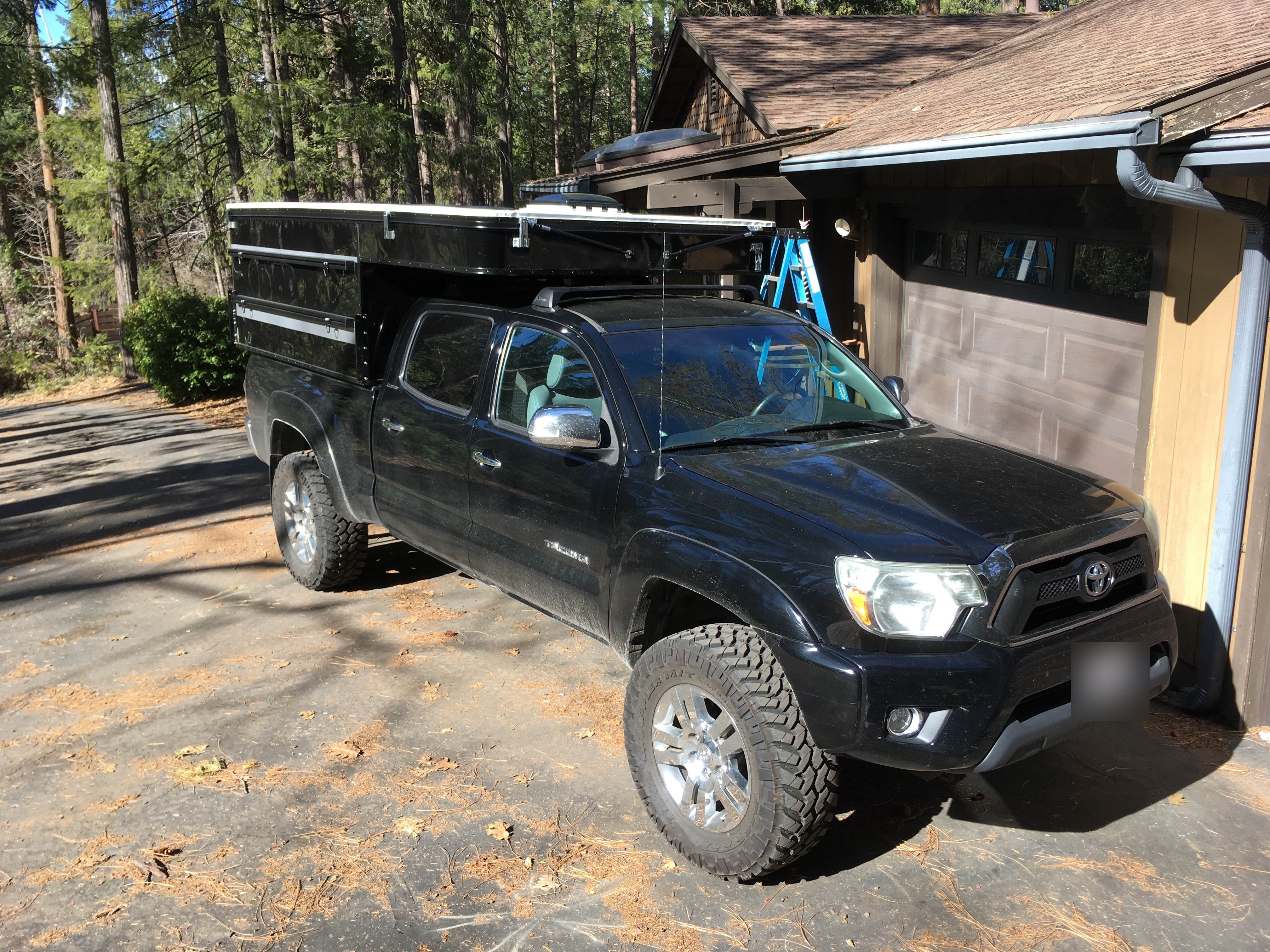
My rig starts with what I call the “Black Stallion” — a 2013 Toyota Tacoma Limited Edition 4×4. Black and silver, leather interior, GPS navigation, and the kind of bulletproof reliability that Toyota trucks are legendary for. But the real magic isn’t just the truck. It’s what sits on top of it: a Four Wheel Campers Project M, color-matched in silver and black, creating a setup that looks like it rolled off a factory floor as one unified machine.
Key Takeaways
- The truck matters: A lifted, upgraded Tacoma 4×4 can take you places most rigs can’t reach — and get you home safely
- The Project M is different: Unlike traditional truck campers, it sits on the bed walls with no interior cabinetry, giving you maximum cargo space below and a comfortable sleeping platform above
- Setup goes outside: The philosophy is simple — sleep inside the camper, live outside it. Your kitchen, dining, and living space are all set up at the campsite
- Go anywhere capability: At under 400 pounds and a low collapsed profile, the Project M barely affects the truck’s handling and lets the rig reach high-clearance 4×4-only roads
- Custom comfort: A queen-plus custom mattress inside means you’re sleeping as well in the backcountry as you do at home
The Foundation: A Tacoma Built for the Wild
Every great camping rig starts with the right foundation, and for me that’s the 2013 Toyota Tacoma. The truck was new at the time I bought it, and the second-generation Tacoma is widely regarded as one of the most capable and reliable mid-size trucks ever built. The Limited trim gave me a comfortable starting point with leather seats, a solid sound system, and factory GPS navigation. But stock wasn’t going to cut it for where I wanted to go.
The Upgrades That Matter
The first upgrade was the tires — heavy-duty Nitto all-terrain tires, larger than stock and with extra-thick off-road sidewalls, giving the truck a wider footprint and significantly better grip on loose dirt, gravel, mud, and rock. These tires are the difference between confidently crawling up a rocky fire road and sliding sideways into a ditch.
Next came the airbag suspension. This is a critical upgrade when you’re running a truck camper, because it allows you to level the truck under load and maintain proper ride height regardless of how much gear you’re carrying. Without it, the rear end sags under the weight of the camper and equipment, killing your headlight aim, reducing ground clearance, and making the truck handle unpredictably on rough terrain. The airbags fully solve the sag from the camper’s added weight, which is what makes hauling it long distances safe.
Finally, a suspension lift gave the truck the additional ground clearance needed to navigate the kind of roads that lead to the best campsites — the ones that aren’t on Google Maps. Combined with the larger tires, the Tacoma sits noticeably higher than stock, clearing obstacles that would scrape or hang up a factory-height truck.
All three of those upgrades — tires, airbags, and lift — were done together at Custom Truck Accessories. Doing them as a single package meant the geometry was set up correctly the first time and everything works in concert.
The result is what I affectionately call a “mountain goat” — a truck that will go virtually anywhere, carry everything I need, and do it with the kind of sure-footed confidence that lets me focus on enjoying the journey rather than worrying about whether I’ll make it.
The Game Changer: Four Wheel Campers Project M
If the Tacoma is the foundation, the Four Wheel Campers Project M is what transforms it from a capable truck into a complete overlanding rig. And what makes the Project M fundamentally different from every other truck camper on the market is what it doesn’t have.
What Makes the Project M Unique
Traditional truck campers are essentially small RVs that slide into your truck bed. They come with built-in kitchens, cabinets, dinettes, sometimes even bathrooms. They’re heavy, they’re tall, and they completely consume your truck bed — meaning you can’t carry anything else back there.
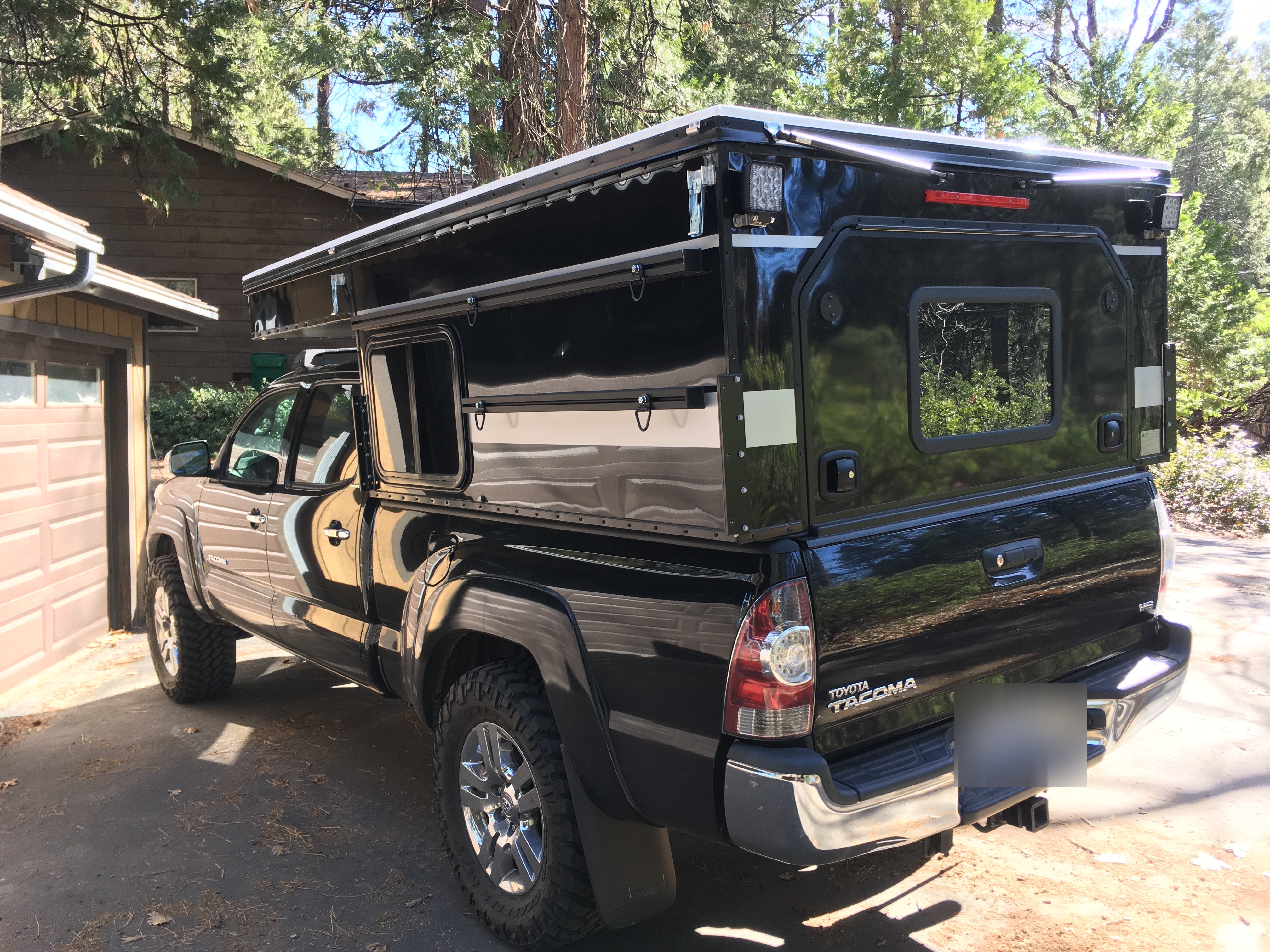
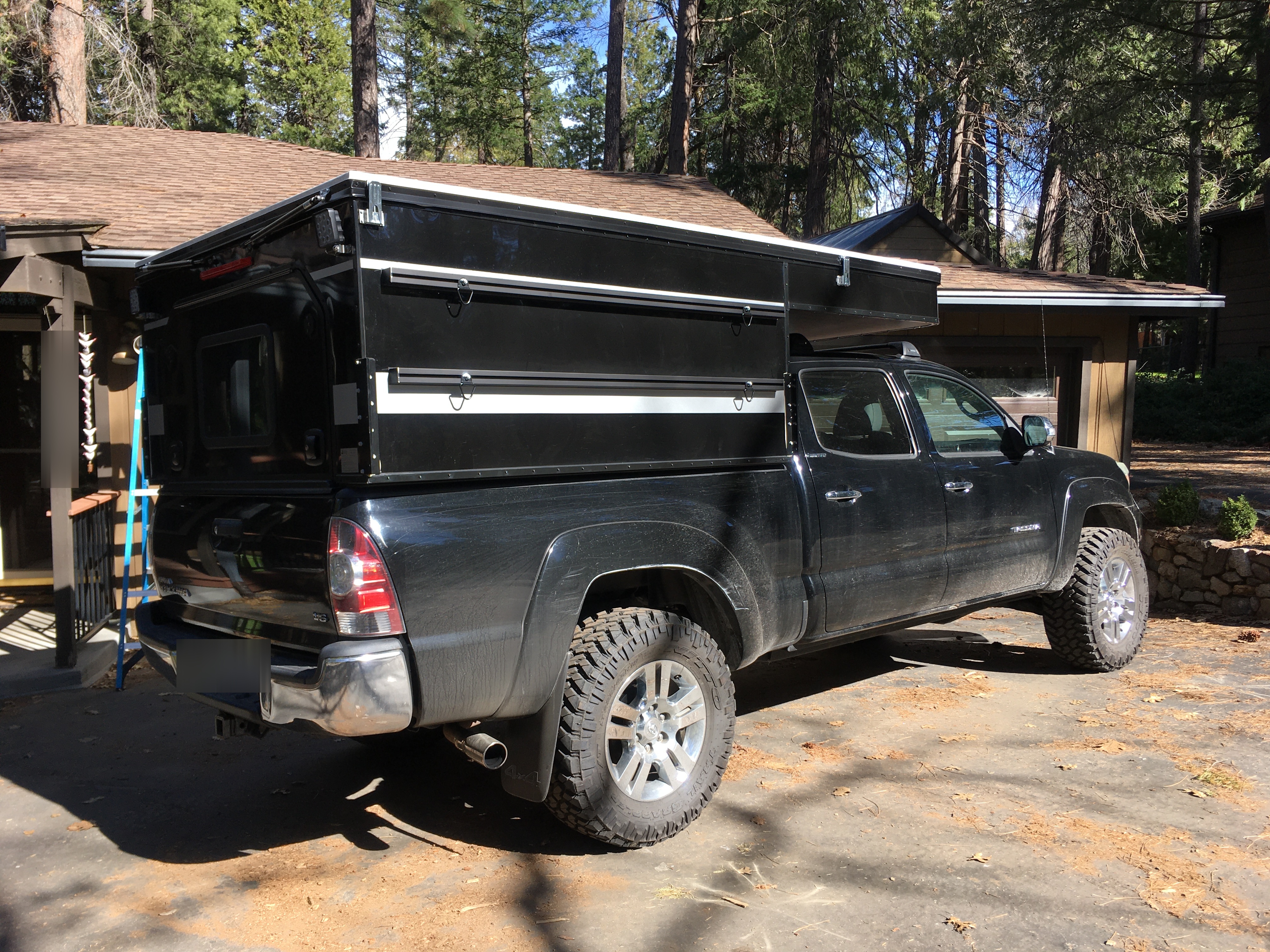
The Project M takes the opposite approach. It sits on top of the bed walls like a topper, with no interior cabinetry, no built-in kitchen, no fixed furniture. What you get is a pop-up sleeping platform with a comfortable, spacious interior — and your entire truck bed remains open below for gear. It’s a brilliantly simple concept: the camper is for sleeping, and everything else happens outside.
At just 377-420 pounds for the regular bed model, the Project M weighs a fraction of what traditional truck campers do. That’s not just a number on a spec sheet — it translates directly to better fuel economy, better handling, better off-road capability, and less stress on your truck’s drivetrain and suspension. You almost forget it’s there while you’re driving.
Driving With the Project M
The Project M does affect fuel economy — there’s no avoiding extra weight and a roof above the cab — but the hit is noticeably less than towing a trailer of similar capability. A big reason is the pop-up design itself: when the top is folded down for travel, the rig has a low profile and surprisingly little wind resistance compared to fixed-roof truck campers, which act like a wall in front of the air. The top only pops up once I’ve parked and I’m setting up camp.
Handling feels a little different at first — there’s more weight high and back — but it’s pretty easy to adapt to and far easier than towing. And because the camper bolts directly to the truck rather than trailing behind it, I can take this rig down high-clearance, four-wheel-drive-only roads that no trailer would survive. That’s what unlocks the campsites most rigs can’t reach.
The Perfect Color Match
I ordered my Project M in silver and black to match the Tacoma, and the result looks like the camper was designed specifically for this truck. The silver panels complement the truck’s paint, and the black frame and accents blend seamlessly with the Tacoma’s trim. When the top is down, the whole rig has a low, aggressive profile that turns heads — most people don’t even realize there’s a camper on the truck until they see the top go up.
The Philosophy: Sleep Inside, Live Outside
Here’s where my approach to camping diverges from the traditional truck camper crowd. Most overlanders want everything packed into the camper — cook inside, eat inside, hang out inside. I think that misses the entire point of being outdoors.
My philosophy is simple: the camper is for sleeping, and the campsite is for living. Inside the Project M, I’ve got a custom-made queen-plus-size mattress that fits the sleeping platform perfectly. It’s genuinely comfortable — not a thin foam pad that you suffer through, but a real mattress that you look forward to at the end of a long day on the trail. That’s all the camper needs to do, and it does it exceptionally well.
Everything else — the kitchen, the dining setup, the camp chairs, the fire pit gear — all of it goes in the truck bed below the camper and gets set up outside at the campsite. This approach has several advantages:
- More cargo space: With the entire truck bed open below the camper, I can carry significantly more gear than a traditional truck camper setup
- Better campsite experience: Cooking and eating outside, under the trees, is the whole reason I go camping. Why would I want to do that inside a cramped camper?
- Premium outdoor setup: Because I’m not spending money on built-in cabinetry, I can invest in high-quality standalone outdoor gear — a proper camp kitchen, comfortable chairs, good lighting
- Flexibility: I can change my outdoor setup, upgrade individual components, or adapt to different camping scenarios without modifying the camper itself
- Clean sleeping space: The camper stays clean and dedicated to sleep — no cooking smells, no spilled food, no grease
Building the Ultimate Campsite
With this rig, I can go anywhere — national forests, BLM land, remote fire roads, established campgrounds — and set up a campsite that rivals what most people achieve with rigs costing three or four times as much. The key is that the Project M gives me the mobility and payload capacity to carry premium outdoor gear to locations that larger, heavier rigs simply can’t reach.
Imagine pulling into a clearing at 7,000 feet elevation, surrounded by pine trees, with a mountain stream nearby. You pop the top on the Project M, unload your camp kitchen from the truck bed, set up your chairs and table with a view, and within 20 minutes you’ve got a complete campsite. That night, you cook dinner over a proper setup, sit by the fire under a sky full of stars, and then climb up into a queen-plus bed in your camper and sleep like a rock.
That’s not roughing it. That’s camping done right.
Project M Specs at a Glance
For those considering the Four Wheel Campers Project M for their own build, here are the key specifications:
- Weight: 377-420 lbs (regular 6.0-6.5′ bed)
- Sleeping surface: 81″ x 66-72″ — fits a queen mattress
- Interior height (popped up): 57-59″ from bed rails
- Collapsed height: 41-45″ from bed rails
- Starting price: $12,595 for regular bed models
- Construction: Ultra-light aluminum frame with one-piece aluminum roof
- Compatibility: Fits mid-size trucks (Tacoma, Ranger, Colorado, Gladiator) and full-size trucks
Frequently Asked Questions
Why a 2013 Tacoma instead of a newer truck?
The 2013 was new when I bought it. I didn’t start the overlanding effort until around 2019, by which point the truck had already proven itself bulletproof. The second-generation Tacoma has a reputation for outliving its owners, and there was no good reason to trade in a paid-off, reliable truck for something newer when this one does the job perfectly.
Did the airbag suspension fully solve the camper sag?
Yes — the airbags fully solve the sag from the camper’s added weight, which is what makes hauling it long distances safe. Adjustable airbag pressure also lets me dial in the right ride height whether the truck is empty or fully loaded with camper plus gear.
Does the Project M affect fuel economy and handling much?
It does affect fuel economy, but less than towing a trailer of similar capability — the pop-down profile when traveling means less wind drag than a fixed-roof camper. Handling feels a little different at first because there’s more weight up high and back, but it’s pretty easy to adapt to and is much easier than towing. And unlike a trailer, the rig can take high-clearance, 4×4-only roads that lead to the best campsites.
What’s Coming Next
This rig is the starting point — the platform that makes everything else possible. In upcoming articles I’ll go deep on the camper itself — the factory options and modifications that turn the Project M into a four-season basecamp — and then on the build-out: the third bed, the wall panel, the Bluetti power system, the ARB fridge, and the custom electrical work that ties it all together. After that I’ll break down every piece of outdoor gear that goes into creating the ultimate campsite experience.
Whether you’re running a Tacoma like mine, a different mid-size truck, or even a full-size pickup, the principles are the same: start with a capable platform, keep the camper simple and lightweight, and invest in quality gear that sets up outside where you can actually enjoy the outdoors.
The best campsite isn’t the one with the most expensive rig — it’s the one where you’re comfortable, well-fed, and surrounded by nature. That’s what this build is all about, and I can’t wait to show you how it all comes together.