
Before any of the third-bed plywood, the Bluetti batteries, or the ARB fridge ever went into the truck, the Project M itself had to be specified, ordered, and prepared as the right canvas for the build. The factory options you choose at order time, the modifications that come from the factory floor, and the after-purchase work that makes a Project M livable year-round are the foundation everything else sits on. This article walks through every decision that went into the camper as a camper — before we get to the fun build-out stuff in the next article.
📑 Table of Contents (click to collapse)
- Key Takeaways
- Factory Order: What We Specified Up Front
- Mechanical Jacks: Rieco-Titan Four-Corner C-Clamps
- Custom Mattresses & Bedding
- Year-Round Storage: How the Camper Stays Loaded & Ready
- Custom Corner Skates: How We Take the Camper Off the Truck
-
Frequently Asked Questions
- How do you prevent mildew in the camper during long-term storage?
- Why 5" thick mattresses — doesn't that stress the pop-top?
- Why didn't you use the factory FWC vinyl mattresses?
- Is the FWC interior insulation kit worth the cost?
- Why coconut coir under the mattress instead of synthetic?
- What's the deal with the custom skates — when do you use them?
- Up Next: The Build-Out
The Four Wheel Campers Project M delivers serious capability in a compact package, but its real potential emerges through thoughtful customization. The factory options and small mods covered here transform the standard pop-up shell into a four-season basecamp that can stay loaded and ready year-round — without compromising the option to return the truck to stock if needed.
Key Takeaways
- Factory-specified options — single ceiling fan, driver-side window, dual L-tracks, exterior T-slot rails, roof rails, FWC interior insulation kit, and rear flood lights — set the stage for everything that comes later
- Rieco-Titan four-corner C-clamp jacks live at home and ride along on every trip — they let one person take the camper off the truck
- Custom 5″ mattresses from a real mattress maker replaced the factory vinyl pads — comfort that rivals a bedroom
- A 1″ coconut coir mattress base plus a 24/7/365 GE dehumidifier let the camper stay loaded and ready year-round, mildew-free
- Hand-built corner skates make taking the camper on and off the truck a one-person job
Factory Order: What We Specified Up Front
Smart customization starts with the right factory options. When ordering our Project M, we focused on features that would support the planned modifications without redundancy. Many of these are factory-only options that are difficult or impossible to retrofit later, so getting the order right was the most important decision in the entire build.
Single Ceiling Fan + Custom Driver-Side Window
The single ceiling fan over the main bed area handles ventilation effectively when paired with the custom window on the driver side. Two fans create unnecessary complexity and power draw — opening a window provides all the cross-ventilation needed. The driver-side window also serves the lower bed occupant, doubling as a light source and view during the day.
Interior L-Tracks on Both Walls
The L-tracks on both interior walls are one of the highest-leverage factory options in the entire build. They became mounting points for the custom storage panel (covered in the next article), they accept ratchet-strap fittings to lock down ActionPackers and the chuck box on rough roads, and they make the wall panel reversible to either side. Without them, half the build-out wouldn’t be possible.
Exterior T-Slot Rails (Both Sides)
FWC’s factory T-slot rails run along both exterior sides of the camper. Custom hooks and accessories slot into these rails for additional gear storage outside the main living area — perfect for wet clothes, camp chairs, or recovery gear that you don’t want inside the camper.
Roof Tracks/Rails
The factory roof rail/track system currently holds the two solar panels (covered in detail in the build-out article) but is also designed to mount additional gear up top — the kind of versatility that’s hard to add after the fact. Specifying the rails at the factory was a future-proofing decision more than an immediate need.
FWC Interior Insulation Kit
This was one of the best decisions of the entire order. The factory insulation kit adds an additional layer of quilted thermal liner on the interior walls and inside the pop-up section. It does two things at once: regulates interior temperature dramatically (cool on hot days when the ceiling fan is running, noticeably warmer on cold mornings) and adds a moisture buffer between the cool aluminum shell and the interior air, which dramatically reduces condensation on cold panels overnight.
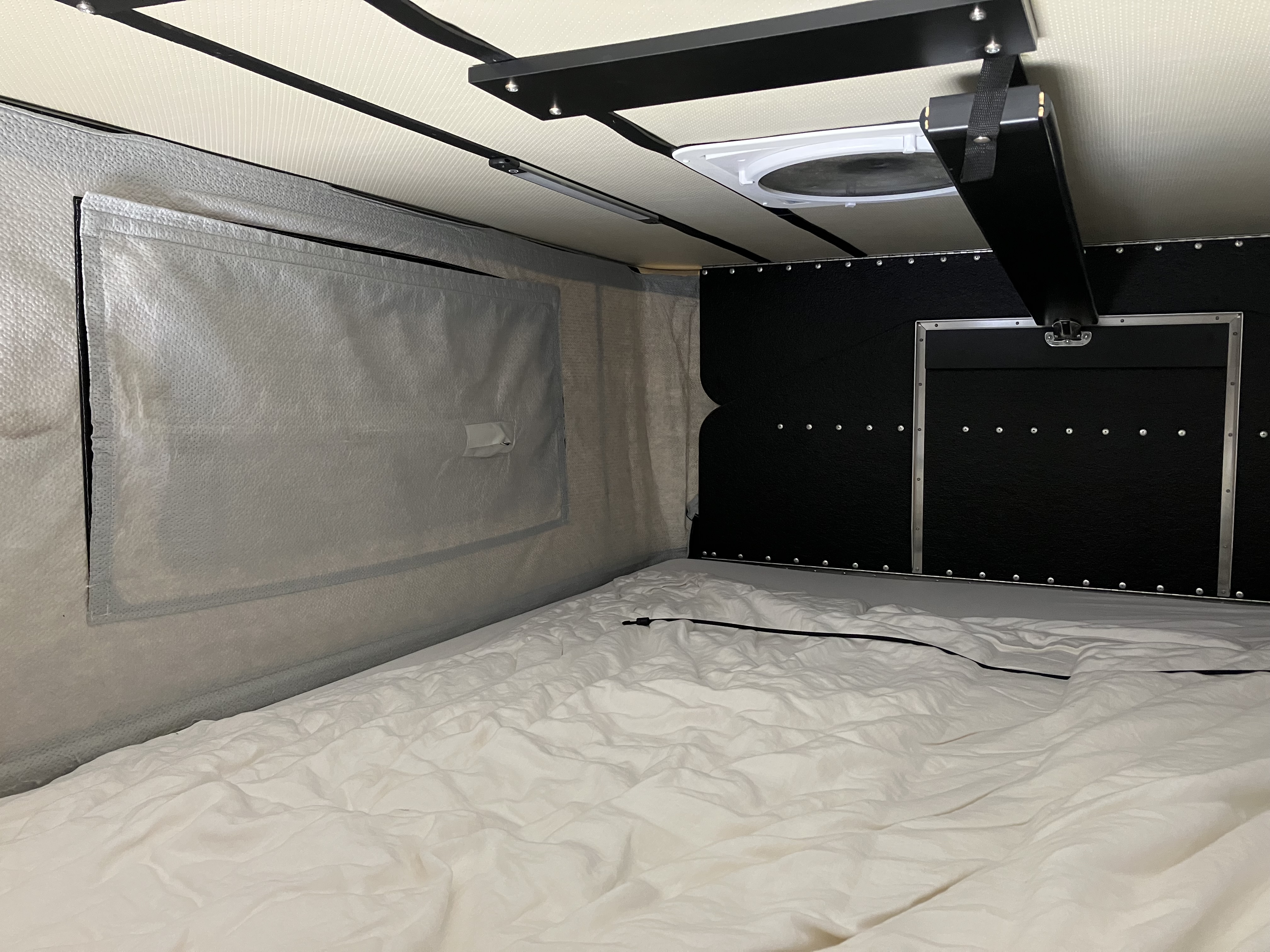
I haven’t slept in a Project M without the insulation kit, so I can’t give you a controlled comparison — but I can tell you that on a hot summer day with the fan running, it’s comfortably cool inside, way cooler than a tent. Cool enough to fall asleep midday, which is something you simply can’t do in most campers.
Rear Flood Lights
The factory rear flood lights illuminate the truck bed and tailgate area at night — invaluable when you’re cooking outside, looking for gear, or setting up after dark. Wired into the camper’s electrical system, they’re switched from inside the camper.
Why We Skipped the Vinyl Mattresses
We declined the factory vinyl mattresses entirely. Two problems: vinyl feels clammy in humid conditions and doesn’t breathe like quality foam and fabric, and — more importantly — the pads aren’t thick enough to support the full weight of an adult. At my weight (around 150 lb), I’d bottom out and feel the platform underneath. Skipping the factory mattresses opened the door for the custom mattress and bedding setup covered later in this article.
Mechanical Jacks: Rieco-Titan Four-Corner C-Clamps
The Rieco-Titan four-corner C-clamp jacks are how the camper comes off and goes back on the truck. One jack per corner, four jacks total, with C-clamps that grip the camper’s frame instead of bolting through. They’re the industry-standard truck-camper jack for a reason: they raise and lower smoothly, they’re light enough that one person can carry one, and they hold the camper rock-steady at full extension.
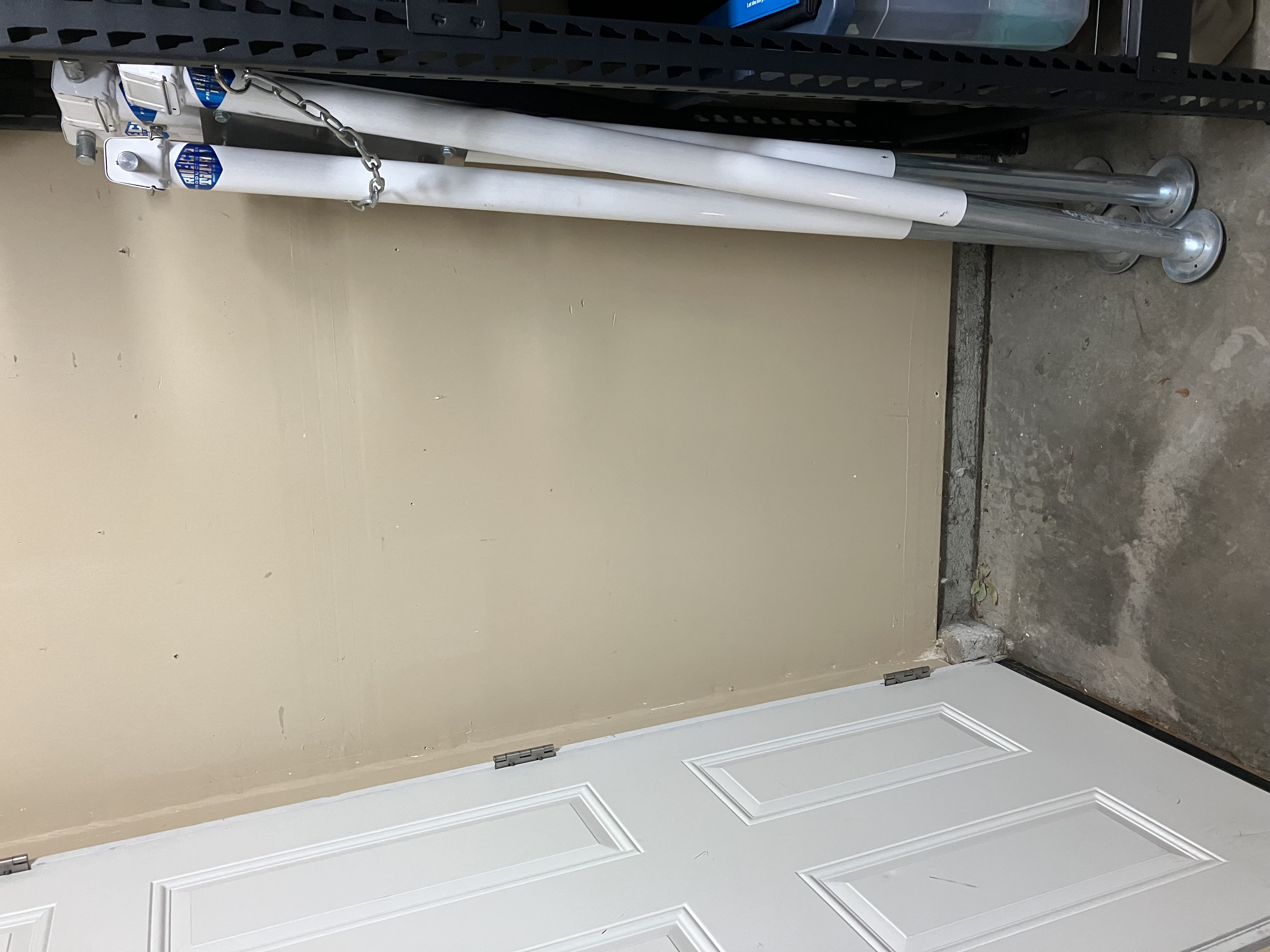
The C-clamp design is what makes them right for this build — bolt-through jacks would require permanent mounting hardware on the camper, which conflicts with the “everything reverses to stock” philosophy. The C-clamps grab and release, leaving no trace.
Custom Mattresses & Bedding
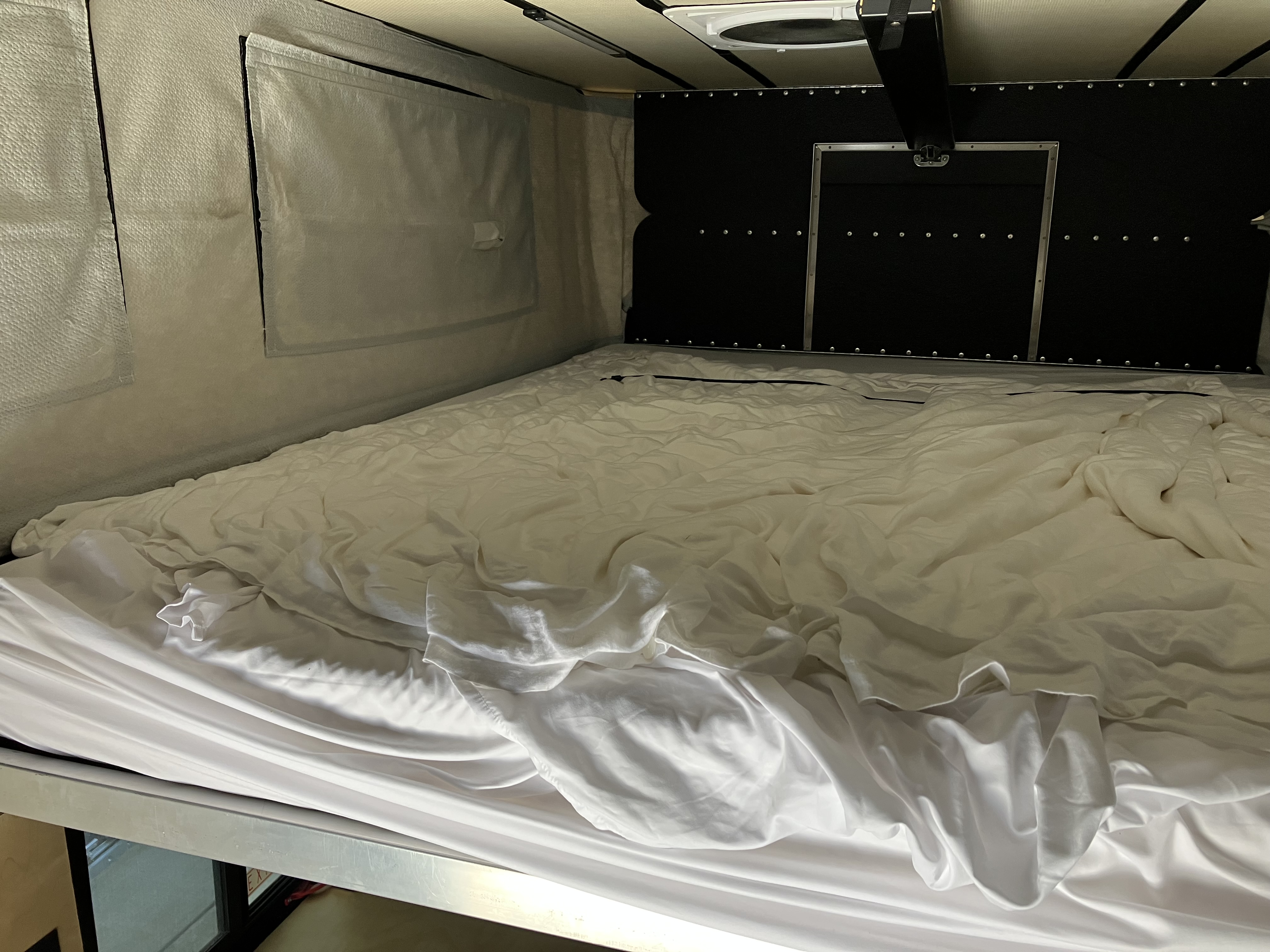
If the camper is for sleeping (and in this build, that’s the explicit philosophy), the mattress is the most important component in the whole interior. We used FoamOrder to build custom mattresses cut to the exact dimensions of the upper sleeping area — which is a touch larger than a standard queen and not a shape you can buy off the shelf.
Why 5 Inches Thick
The mattress maker’s recommendation: 5 inches is the minimum thickness needed to support the weight of an adult body without bottoming out. Anything thinner — including the factory vinyl — and you feel the platform underneath. We followed their guidance and the result is genuinely comfortable, like sleeping at home.
The Latched-Down Top Trick
A 5-inch mattress does put a small amount of pressure on the camper’s pop-top mechanism when latched down for travel — the top sits a fraction higher than it would on a thinner pad. The fix is simple: any time the rig is parked, especially when stored at home, I unlatch the top. With the latches released, the top moves upward to rest gently on the mattresses without stressing the latches, the seals, or the foam itself. After a few minutes the top settles into place and stays there until I’m ready to drive again. Latch only for travel — that’s the rule.
Custom Bedding
Standard sheets and bedding don’t fit a non-standard mattress shape, so the bedding is also custom — made by Ocochi to match the mattresses exactly. Fitted sheets that actually fit, blankets sized for the space, and a finished look that doesn’t scream “RV bedding.”
Year-Round Storage: How the Camper Stays Loaded & Ready
Most truck campers get tucked away for winter. Mine doesn’t. The build is engineered so the camper can stay loaded and ready year-round, in any weather, without mildew, condensation, or the musty stored-camper smell that sets in after a few months.
Two upgrades make that possible — and they only work because the FWC interior insulation kit (above) is also doing its part to keep cold panels from sweating overnight.
1″ Coconut Coir Mattress Base
Underneath the custom 5-inch mattress sits a 1-inch coconut coir mattress base from The Futon Shop (queen size). Coconut coir is the mattress maker’s recommendation specifically for moisture management — it wicks humidity away from the underside of the mattress and resists mold and mildew by nature, where synthetic foam pads tend to trap moisture and breed both. Whether there’s a synthetic alternative I haven’t found one; coconut is what they suggested and it’s what works.
24/7/365 GE Dehumidifier
When the camper is parked at home (which is most of the year), a GE 50-pint Energy Star dehumidifier (model AWHL50LD) runs continuously inside, plugged into shore power. It’s a Wi-Fi-enabled unit with auto-drain, so the collected water gets pumped straight outside through a hose — no bucket to empty, no maintenance, just runs forever. Combined with the coconut base and the FWC insulation kit, the interior stays dry indefinitely.
The result: I open the camper any day of the year and it’s ready to roll. No tarping, no winterizing rituals, no airing-out routine before the first spring trip.
Custom Corner Skates: How We Take the Camper Off the Truck
Six bolts attach the camper to the truck — three on each side, threaded through the interior near the dinette seats. To take the camper off, you back the truck out from under the jacked-up camper. To put it back on, those six bolts have to align exactly with their holes. Off by a quarter inch and you’re not going anywhere.
Standard practice is to wrestle the camper into position by hand, which is brutal and imprecise. Our solution: hand-built corner skates that turn the entire camper into a four-wheel cart so it glides into perfect alignment with a gentle push.
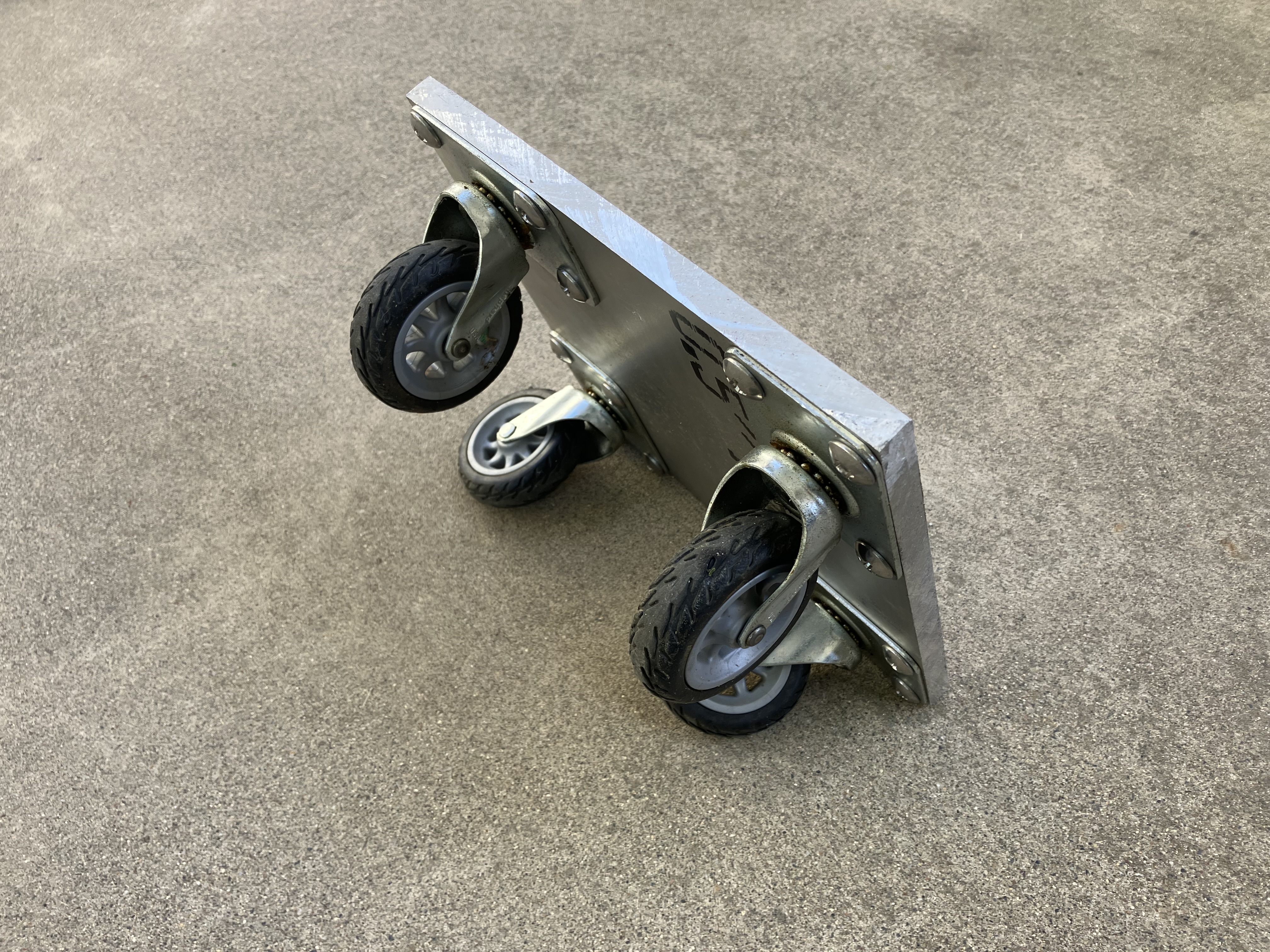
The build is straightforward: aluminum plate sourced from Metals Depot, hand-cut to size, with holes drilled and tapped to mount four heavy-duty casters per skate. The casters, screws, and the tapping tool itself all came from McMaster-Carr — McMaster is the secret weapon of any project like this.
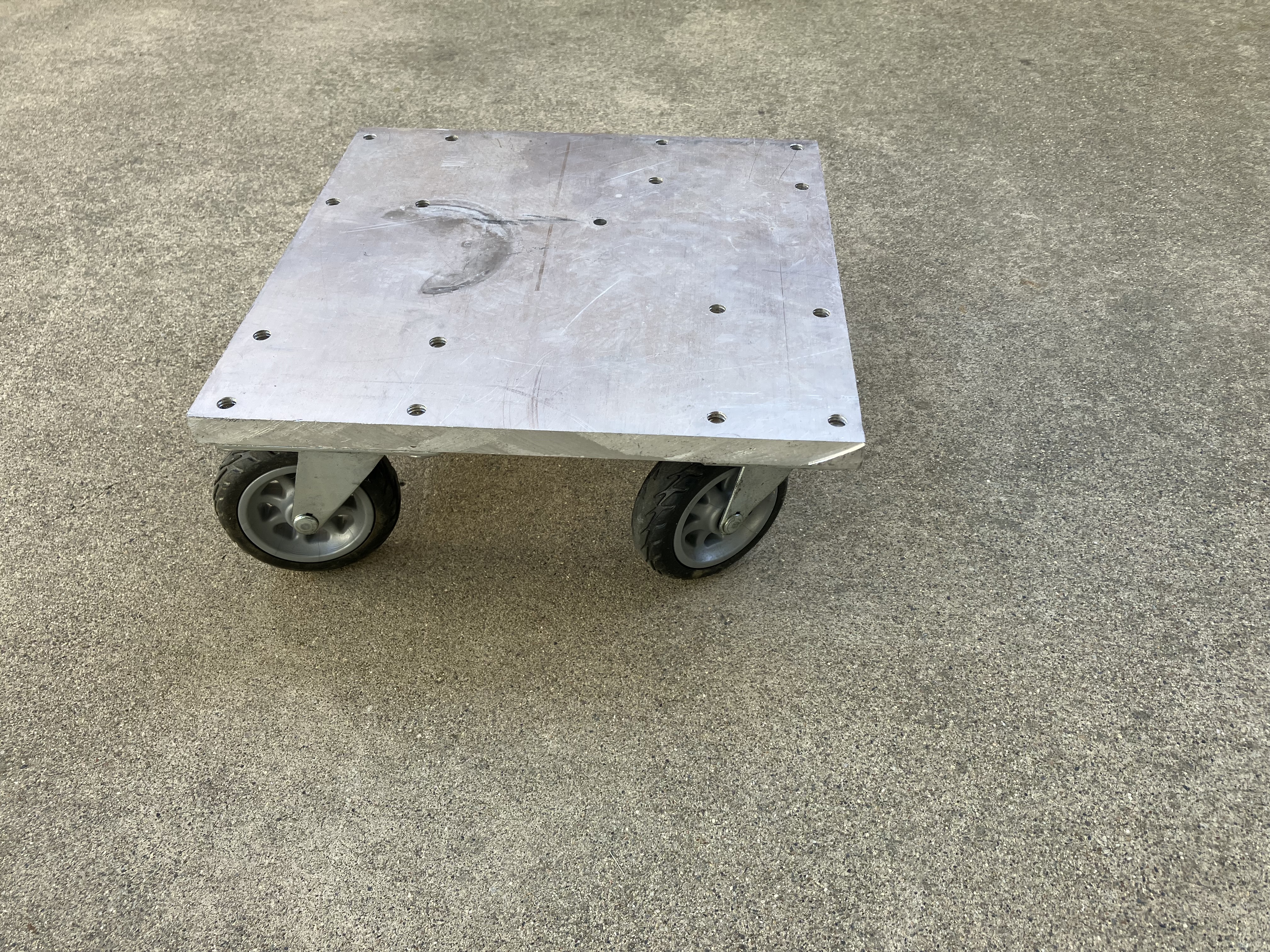
One skate goes under each Rieco-Titan jack pad. With sixteen casters working together, the entire camper rolls smoothly across a flat driveway or garage floor. I can nudge it with one hand into alignment with the truck bed bolts. What used to be a two-person wrestle is now a one-person job, done in minutes.
Frequently Asked Questions
How do you prevent mildew in the camper during long-term storage?
Three things working together: the FWC interior insulation kit (which buffers cold panels from interior air and reduces condensation), a 1″ coconut coir mattress base under the main mattress (wicks moisture, resists mold), and a GE 50-pint Energy Star dehumidifier running 24/7/365 with auto-drain to outside. The combination keeps the interior dry indefinitely so the camper can stay loaded and ready any time of year.
Why 5″ thick mattresses — doesn’t that stress the pop-top?
Five inches is what the mattress maker said is needed to fully support an adult’s body weight without bottoming out — anything thinner and you feel the platform underneath. The thicker mattress does put a small amount of stress on the latches when the top is closed for travel. The solution is to unlatch the top whenever the rig is parked (especially at home in storage), letting the top rest gently on the mattresses without any latch tension. Latch only for travel.
Why didn’t you use the factory FWC vinyl mattresses?
The factory vinyl pads aren’t thick enough to support an adult’s body weight — at my weight (around 150 lb) I’d bottom out and feel the platform. Vinyl is also slippery, doesn’t breathe well, and feels clammy in humid conditions. We wanted a real bedroom-caliber mattress, and the only way to get one in this non-standard size was custom.
Is the FWC interior insulation kit worth the cost?
I haven’t slept in a Project M without it, so I can’t give you a head-to-head comparison. But based on actual use, I believe it absolutely is. It keeps the interior cool on hot days (especially with the ceiling fan running — way cooler than a tent, cool enough to nap mid-afternoon), warmer on cold mornings, and it adds the moisture buffer that makes the year-round storage strategy work.
Why coconut coir under the mattress instead of synthetic?
The mattress maker recommended coconut coir specifically for its moisture-wicking and natural mold resistance. I’m not aware of a synthetic alternative that does the same job — synthetic foam tends to trap moisture rather than move it. Coconut is what was suggested, and it’s what works.
What’s the deal with the custom skates — when do you use them?
Only when the camper is being taken off the truck or put back on. Six alignment bolts (three per side) attach the camper to the truck, and they have to line up perfectly to thread back in. The skates turn the entire camper into a wheeled cart so I can nudge it into exact position by hand instead of wrestling it. Built from Metals Depot aluminum and McMaster-Carr casters — four casters per skate, four skates total, sixteen wheels in all. The rest of the time the skates sit in the garage.
Up Next: The Build-Out
The camper itself is now ready — insulated, mattressed, jacks at hand, dehumidifier humming. The next article picks up the story with everything we built inside the camper: the third bed platform, the custom wall panel with monitor arm and cellular router, the Bluetti AC200L + B300 power system, two roof-mounted solar panels, the custom electrical work, the ARB Elements fridge on its slide, and the L-track tie-down system that keeps everything secure on rough roads.